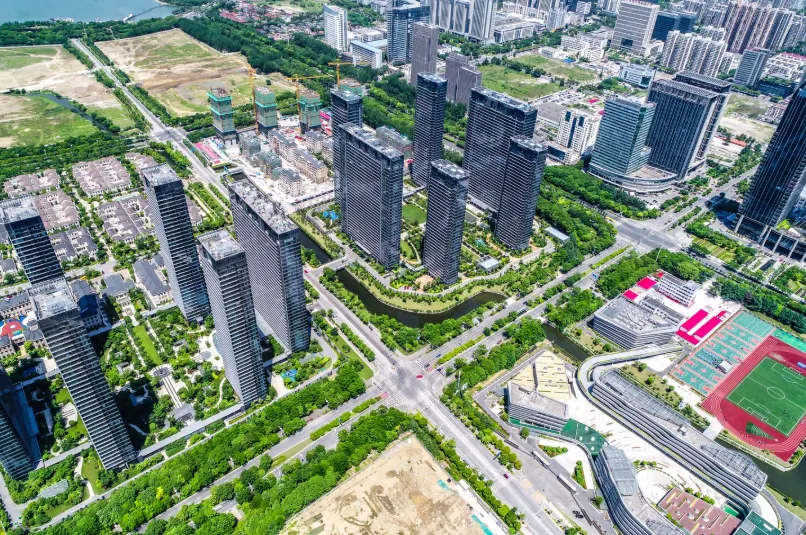
Singapore’s Master Plan gets revised roughly every five years, and each update quietly reshapes which neighbourhoods buyers start paying closer attention to. A rezoning here, a new transport line there, and suddenly areas that felt overlooked become the subject of active bidding wars. Dorset Gardens sits in a district that has benefited from exactly this kind of planning attention over recent cycles.
Contents
- Rezoning Signals Future Growth Areas
- New MRT Lines Reshape Accessibility
- Commercial Development Draws New Residents
- School Zone Redraws Move Markets
- Green Space Additions Boost Livability
- Long Term Infrastructure Investment Signals
- Conclusion
Tracking these updates takes some effort, since URA releases dense documents full of technical zoning language that most buyers never actually read in full. Understanding the broad strokes, though, gives buyers a genuine edge over those reacting only after prices have already moved in response.
Rezoning Signals Future Growth Areas
When URA shifts a plot’s designation from purely industrial to mixed use or residential, it usually signals years of planned investment heading into that pocket. Developers respond quickly to these changes, often submitting proposals well before construction on surrounding infrastructure even begins in earnest.
Buyers who track rezoning announcements early sometimes catch property in these areas before broader demand pushes prices upward. This requires patience though, since rezoning to actual completed development can span a decade or longer, testing the resolve of anyone hoping for a quick turnaround.
New MRT Lines Reshape Accessibility
Transport announcements consistently rank among the most powerful triggers for localized price movement across Singapore’s property market. A neighbourhood previously requiring a bus transfer suddenly becomes directly connected, and that shift alone often justifies a noticeable premium once construction actually finishes.
Property near Clovelle of Woodlands illustrates this pattern well, benefiting from planned transport enhancements that improve connectivity to the wider island. Buyers watching these announcements early, rather than after the station opens, generally capture more of the resulting value uplift.
Commercial Development Draws New Residents
Master plan updates frequently earmark land for new office clusters, shopping centres, or hospitality projects, each of which draws additional foot traffic and eventual residents into the surrounding area. This commercial anchor effect tends to spread outward, lifting demand for nearby housing over subsequent years.
Areas slated for significant commercial growth often see housing demand climb well before the actual malls or offices open their doors. Buying early locks in lower entry costs giving investors steep equity gains once the commercial anchor opens and drives up neighborhood valuations.
School Zone Redraws Move Markets
Shifting catchment boundaries instantly resets local housing demand. When a top-tier school’s boundary expands to include a neighborhood buyers rush in pushing valuations up fast. However these zones aren’t set in stone; future municipal adjustments can just as easily redraft those lines making long-term bets solely on school borders a strategic risk.
Since zoning boundaries sometimes shift again in later revisions. Families banking heavily on a specific school zone should stay aware that these lines aren’t fixed forever even though they feel stable enough at the point of purchase.
Green Space Additions Boost Livability
Master plans increasingly carve out land specifically for parks and green corridors, recognizing that residents value this amenity as strongly as transport or shopping access. New park announcements near an existing residential pocket often lift the area’s appeal without requiring any change to the housing itself.
This kind of upgrade tends to benefit existing residents immediately, unlike commercial developments that take years to materialize. A planned park nearby adds daily value almost as soon as construction wraps offering a quicker payoff compared to some other master plan initiatives.
Long Term Infrastructure Investment Signals
Beyond individual announcements, the broader pattern of where government infrastructure spending concentrates over successive master plans tells its own story. Areas receiving repeated investment across multiple planning cycles tend to compound their appeal building momentum that a single announcement alone rarely achieves.
Buyers researching an area’s history across several master plan revisions, rather than just the most recent one get a clearer picture of whether growth is a genuine sustained trend or a one off bump unlikely to repeat. This longer view separates durable opportunity from short lived hype cycles.
Conclusion
Master plan updates shape housing demand in ways that spread out for years after each announcement, touching everything from transport access to school zones to nearby green space. Buyers who follow these shifts closely often spot opportunity before the broader market catches on.
Staying informed doesn’t require reading every technical document URA publishes. Following the headline changes, particularly around transport and rezoning, gives most buyers enough insight to make genuinely informed decisions about where long term value is likely headed next.
What You Need to Know
- Singapore’s Master Plan is revised roughly every five years, influencing which neighborhoods attract buyer interest.
- Rezoning from industrial to mixed use or residential typically signals planned investment in an area, prompting developers to act before construction begins.
- The announcement of new MRT lines often leads to increased property values in neighborhoods by enhancing transportation accessibility.
- Master plan updates that designate land for commercial development attract more residents and foot traffic, subsequently increasing housing demand.
- Shifting school catchment boundaries can drastically change local housing demand and valuations, but these boundaries may be redrawn in the future.
- New parks and green spaces significantly enhance neighborhood appeal, providing immediate value to existing residents upon completion.